Mitsui Chemicals and the Development Bank of Japan (DBJ) agreed around Nov. 9, 2026 to buy all of photoresist maker JSR from state-backed Japan Investment Corp. (JIC) for ¥1.84 trillion, about $11.6 billion. Closing is planned for the second half of fiscal 2027, which ends in March 2028.
What happened
According to Bloomberg’s Nov. 9, 2026 report, which rounds the price to $12 billion, and The Japan Times on the same day, the deal is structured as follows:
- Buyers: Mitsui Chemicals and DBJ, acquiring 100% of JSR from JIC.
- Price: ¥1.84 trillion, about $11.6 billion.
- Financing: a ¥1.64 trillion bridge loan from banks and ¥200 billion from DBJ.
- Timing: closing planned for the second half of fiscal 2027 (the year ending March 2028).
- Market reaction: Mitsui Chemicals shares fell about 9% after the announcement.
In September 2026, reports said JSR was weighing proposals from Mitsui Chemicals and Mitsubishi Chemical. Earlier reports of a bid of more than $8 billion likely date from that stage and are superseded by the agreed price.
Why it matters for lithography materials
This section is CS Fusion’s analysis.
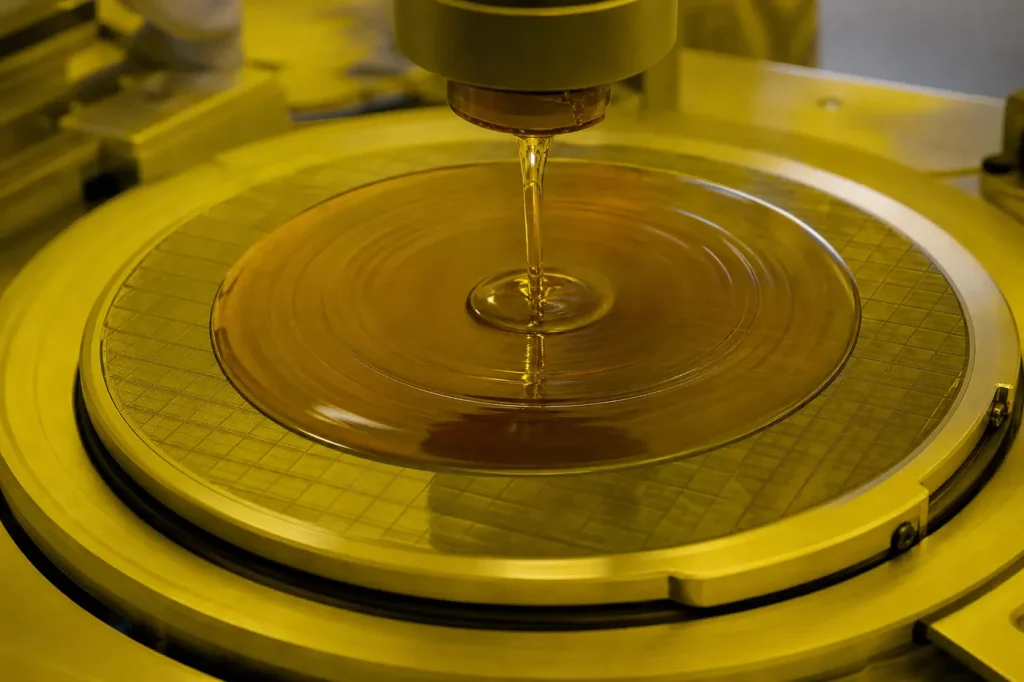
Photoresist is a concentrated supply chain. A photoresist is the light-sensitive polymer film that carries a pattern from the mask to the wafer. Every lithography layer needs one, matched to the exposure wavelength: i-line at 365 nm, KrF at 248 nm, ArF at 193 nm and EUV at 13.5 nm. A small group of Japanese companies, JSR among them, supplies most of the world’s resists, especially at the leading edge. A change of owner at one of them is a supply-chain event for every fab that qualifies its materials.
Requalification is slow. Fabs qualify a resist against a specific process, tool set and defect budget. Switching suppliers, or even a change in a supplier’s raw materials or plant, can trigger months of requalification. Ownership changes rarely alter products in the short term, but engineers will watch for any consolidation of product lines or plants once the deal closes.
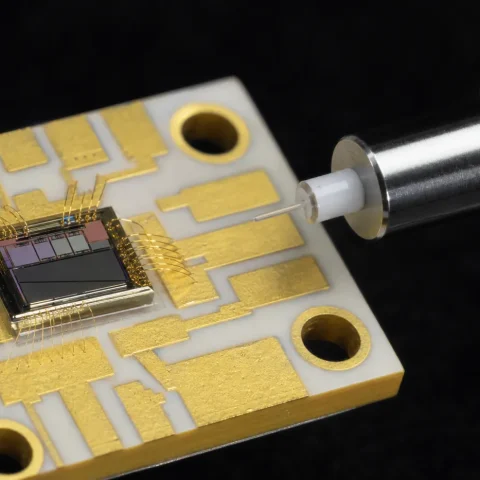
Compound semiconductor fabs use the same chemistry. GaN, GaAs and InP device lines rely mostly on i-line and DUV resists for gate, mesa and metal patterning, often with lift-off processes that set their own demands on resist profile. Their volumes are small next to silicon logic, so they tend to buy from the same catalogues rather than drive new products. See our gallium nitride and indium phosphide hubs for how those devices are built, and the materials index for the wider family.
What we don’t know yet
- The final terms as stated by the companies. This brief relies on Bloomberg and The Japan Times; we have not yet checked the Mitsui Chemicals and JSR investor releases.
- How ownership will be split between Mitsui Chemicals and DBJ.
- Which regulatory approvals the deal needs before closing, inside and outside Japan.
- Whether Mitsui Chemicals plans to combine JSR’s resist business with its existing businesses.
Sources
- Bloomberg, “Mitsui Chemicals to Take Over Chip Linchpin JSR for $12 Billion”, Nov. 9, 2026: https://www.bloomberg.com/news/articles/2026-11-09/japan-s-mitsui-chemicals-dbj-to-buy-jsr-for-12-billion
- The Japan Times, on the Mitsui Chemicals takeover of JSR, Nov. 9, 2026: https://www.japantimes.co.jp/business/2026/11/09/companies/mitsui-chemicals-jsr-takeover/